

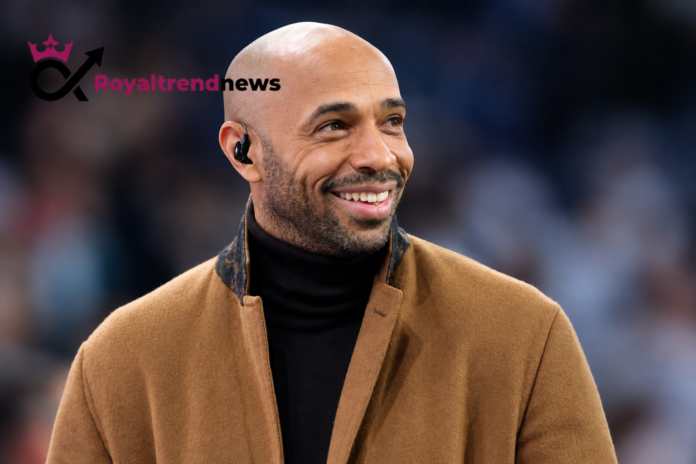
There are strikers who score goals, and then there are strikers who change the way people think about scoring goals. Thierry Henry belongs firmly in the second group. For nearly a decade in English football, and long after it, his name carried a kind of weight that stats alone can’t explain. To understand why, you have to look past the highlight reels and into the details of how he actually played the game.
A Career Built in Stages
Henry didn’t arrive at greatness overnight. He came through the French youth system at Clairefontaine before breaking into the first team at Monaco as a teenager, where his early promise was already obvious. A short and difficult spell at Juventus followed, where he was mostly used as a winger and never quite settled into the Italian game.
That move to Italy could have derailed his career. Instead, it set up the transfer that would define it. At Monaco, under a young manager who would go on to shape a huge part of Henry’s career, he was already showing signs of the pace and finishing that would later terrorize Premier League defenses. He helped France win the 1998 World Cup on home soil, finishing as the tournament’s joint top scorer despite still being a relatively young player without a fixed position at club level. That achievement alone would have made him a household name in France, but it was really just the beginning.
The Wenger Effect
In 1999, Arsène Wenger brought Henry to Arsenal for around £11 million, a fee that now looks almost absurd given what followed. Wenger made one decision that changed everything: he moved Henry from the wing to the central striker role. It wasn’t an immediate fit. Henry struggled in his first few months in the Premier League, adjusting to a physical, fast paced league that was nothing like Ligue 1 or Serie A.
Once it clicked, though, it clicked completely. Within a couple of seasons, Henry was not just scoring goals but scoring them in ways defenders hadn’t quite seen before.
Breaking Down the Skill
What made Henry difficult to defend against wasn’t just raw pace, although he had plenty of it. It was the combination of speed with control, timing, and finishing technique that few strikers before him had managed together.
His signature move became almost a trademark: cutting in from the left, taking a touch inside, and curling the ball into the far corner with his right foot. Goalkeepers knew it was coming. Most still couldn’t stop it. That’s the mark of technique over trickery.
Henry also read space better than most forwards of his generation. He wasn’t only running onto through balls, he was creating angles for himself, dragging defenders out of position, and timing his runs to stay just onside. This is part of why his statistics include not only goals but a heavy assist tally as well. He set up teammates as often as he finished chances himself.
There was also a physical element to his game that often gets overlooked. Henry was tall for a forward of his style, standing well over six feet, yet he moved with the low center of gravity usually associated with smaller, quicker players. That mix of height and agility made him awkward to mark. Defenders who tried to muscle him off the ball often found he had already shifted the ball onto his stronger foot before they could react.
Style That Balanced Flair and Efficiency
Some players are entertainers first and goal scorers second. Henry managed to be both without one undercutting the other. There was elegance in how he moved with the ball, a kind of gliding stride that made defenders look slower than they were. But none of it was for show. Every touch had a purpose tied to getting a shot away or opening a passing lane.
This balance is part of why his football still holds up when people rewatch it today. It doesn’t feel dated in the way some early-2000s highlight reels do. The movement, the first touch, and the finishing all still look modern.
The Invincibles Season
No conversation about Henry’s genius is complete without the 2003-04 season. Arsenal went the entire Premier League campaign unbeaten, a feat that hadn’t been achieved since Preston North End over a century earlier. Henry scored 30 league goals that season and added 20 assists, becoming the only player in Premier League history to reach both marks in the same campaign.
Arsenal finished with 90 points and did not lose a single match across the 38-game season. Henry missed just one league game the entire year. It was, by most measures, the peak of his individual output and a season that turned “the Invincibles” into a permanent part of English football folklore.
Leadership Beyond the Numbers
Henry captained Arsenal for his final two seasons at the club, leading them to their first-ever UEFA Champions League final in 2006. Teammates from that era often describe him as demanding but fair, someone who expected the same standard from others that he set for himself.
He also played a mentoring role for younger players coming through the Arsenal squad during those years. It wasn’t the loudest kind of leadership, but it shaped how the team carried itself during a period when Arsenal were competing at the very top of English and European football.
Former teammates have spoken over the years about how seriously Henry took preparation and detail, whether that meant studying an opponent’s tendencies or working on a specific finish after training had already ended. That habit of treating the game as something to be studied, not just played, is part of why his transition into media work and coaching after retirement felt so natural to those who knew him during his playing days.
Life After Arsenal
In 2007, Henry made the move to Barcelona, a transfer that surprised plenty of people given his standing as an Arsenal icon before he had even turned thirty. It took time for him to find his footing in Pep Guardiola’s system, but by the 2008-09 season, he was part of a front three alongside Samuel Eto’o and Lionel Messi that helped deliver a treble, including the Champions League title.
From there, Henry moved to Major League Soccer with the New York Red Bulls, where he spent several seasons before retiring in 2014. He also returned to Arsenal briefly on loan in 2012, scoring a memorable goal against Leeds United in the FA Cup that reminded everyone why he’d been so loved in the first place.
Numbers That Still Stand Out
Across his entire career, Henry scored over 400 goals for club and country combined. At Arsenal alone, he finished as the club’s all-time leading scorer with 228 goals across all competitions, a record that has stood for years despite the club producing plenty of talented forwards since. He won the Premier League Golden Boot four times, a record that has only been matched in the years since.
These numbers matter, but they only tell part of the story. What made Henry stand out wasn’t just how often he scored, it was how he scored and the situations he scored in. Big games, tight matches, moments where Arsenal needed someone to step up. He tended to be there.
A Legacy Set in Bronze
Arsenal honored Henry with a statue outside the Emirates Stadium, one of several placed there to recognize the club’s greatest players. For a striker who arrived as a relative unknown quantity in English football and left as arguably the greatest player in the club’s history, it’s a fitting tribute.
His influence extends beyond Arsenal too. The template he helped establish, a fast, technical forward who can play through the middle or drift wide and still finish at an elite level, has shaped how modern attacking players are developed and deployed. Plenty of forwards who came after him have drawn comparisons, fair or not, simply because Henry set such a high bar for what that role could look like.
Why the Word “Genius” Fits
It’s easy to overuse words like genius in sports writing, but with Henry, it holds up under scrutiny. He didn’t just have talent, he had an unusual clarity about how to use it. Every part of his game, from movement to finishing to decision making under pressure, worked together in a way that made difficult things look almost effortless.
That’s what separates a very good player from a genuinely great one, and it’s why, years after his final competitive match, Thierry Henry’s name still comes up whenever people talk about the greatest strikers the Premier League, and football more broadly, has ever seen.
FAQs
What made Thierry Henry different from other strikers of his era?
Henry combined pace with technique in a way few forwards managed. He wasn’t just fast, he had the control and finishing to make full use of that speed, along with a signature move of cutting inside and curling the ball into the far corner.
How many goals did Thierry Henry score for Arsenal?
Henry finished as Arsenal’s all-time leading goalscorer with 228 goals across all competitions, a record that has stood for years despite the club developing several talented forwards since his departure.
What was Thierry Henry’s role in the Invincibles season?
During the unbeaten 2003-04 season, Henry scored 30 league goals and added 20 assists, becoming the only player in Premier League history to hit both marks in a single campaign.
Did Thierry Henry succeed after leaving Arsenal?
Yes. He joined Barcelona in 2007 and became part of a treble winning side in 2008-09 alongside Samuel Eto’o and Lionel Messi, later playing several seasons in MLS with the New York Red Bulls before retiring in 2014.
Why is Thierry Henry considered a footballing genius?
His game brought together speed, technique, and decision making in a way that made difficult moments look simple. That combination, along with his consistency at the highest level, is why his name still comes up in conversations about the greatest strikers in football history.
Final Thoughts
Thierry Henry’s career isn’t just a collection of records and trophies, it’s a case study in what happens when natural talent meets discipline and self awareness. He didn’t just show up with pace and finishing ability, he built a game around understanding exactly how to use what he had. That’s rare, and it’s why his name still holds weight in conversations about the greatest to ever play the position.
Years after his final match, coaches still reference his movement, fans still rewatch his goals, and young strikers are still compared to him, fairly or not. That kind of staying power isn’t an accident. It’s earned, and Thierry Henry earned every bit of it.